

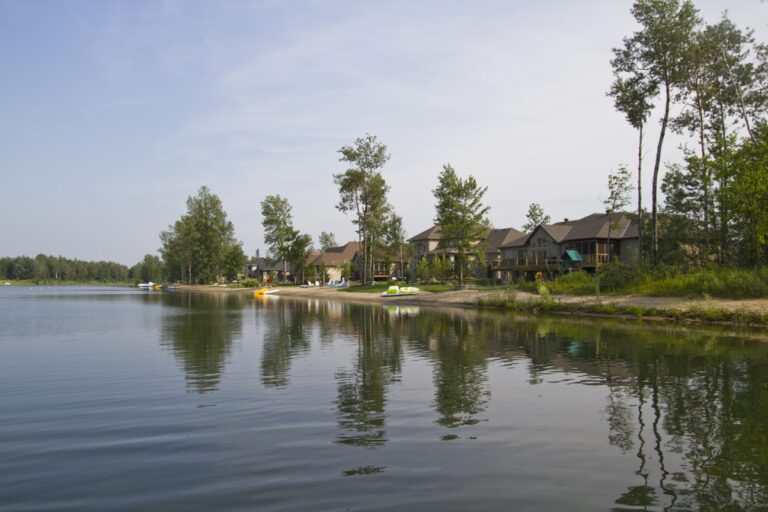
Experience a unique village atmosphere combined with premium resort-style amenities. Located just 22 km south of Parliament Hill, Woodstream offers the perfect blend of expansive, treed home sites and modern city convenience.
- Signature Amenities: Enjoy private tennis courts, sprawling green spaces, and a vibrant sense of community.
- The Village Trail: Access the western link of the Central Village Trail, featuring a scenic 2 km brookside walkway.
- Proven Vision: Built on the success of the Sunset Lakes community, Woodstream offers a refined lifestyle within the City of Ottawa.
Buying an existing home in woodstream?
- 1) Before “closing”, contact the Woodstream Owners Association (woodstreamtreasurer@gmail.com) to make sure that you obtain a Status Certificate, which confirms that Owners Association dues are up to date and that the property is in compliance with the covenants.
- 2) Review the Covenants and the Woodstream Owner’s Association information for the chosen community.
Owner & Resident Resources
Welcome Package
The Woodstream Welcome Package is designed to protect your investment and enhance our shared community culture. It provides essential guidance on environmental protections, design reviews, and owner responsibilities. Click the link below to access the full document.
Annual Maintenance Fees & Finance
Woodstream Owners Association (WSOA)
Welcome to Woodstream, a small community in Greely, in the South of Ottawa. Woodstream features the best of both worlds in homeownership: attractive single-family homes on large lots that yield all the benefits of private ownership.
Also featured in the community are kilometres of brookside trails, a pond, tennis court, basketball court, play area, and more – providing the benefits usually available only to collective ownership such as condominiums or resorts.
All common facilities are maintained by the Woodstream Owners Association (WSOA). The budget comes from an annual levy from each owner of a lot and a mandatory membership fee of $450/year.
All landowners in Woodstream automatically become members of the Owners’ Association and are encouraged to stay connected with their community.
AGM and Social

Wood Stream Owners Association Annual General Meeting and Social
Wednesday, May 6th, 2026
(Community Building: Woodstream Drive)
Annual General Meeting: 7:00 pm
Social: After the meeting (Beverages & Munchies will be served)
We encourage all to attend!
AGM Minutes
Bylaws
WSOA By-law No. 1
Bylaw Compliance
Background
Woodstream will become home to many families over the years. Each year will bring additional families, each with their own reasons for choosing Woodstream as the place to make their home. Many of us are attracted to the area because of its location, its “child-friendly” environment and its recreational facilities. Many of us are also attracted to the area because of its commitment to the environment and its sense of community.
The reason that Woodstream is so unique is in some respects a direct result of the original vision that was Woodstream – a new community vision that each of us “bought into” (literally and figuratively) when we purchased our property here. This vision is part of the Woodstream “package” and is variously set out in writing in the subdivision agreement, the development marketing materials and our respective property deeds. Whether related to recreational facilities, common area maintenance or environmental concerns, these are the “written” attributes of Woodstream and therefore need to be maintained. They need to be maintained, however, in a manner that allows a key “unwritten” attribute of Woodstream – the sense of community – to be fostered.
The Role of the Woodstream Owners Association (WSOA) Board of Directors
The care and management of the Woodstream community now rests with the Woodstream Owners Association (WSOA), of which there is annually elected a board of directors. The WSOA Board of Directors, a group of volunteers from our neighbourhood, is committed to listening to the suggestions and concerns raised by residents of Woodstream and to looking for ways to ensure that, as we grow in size, our sense of community grows along with that size.
As the development of Woodstream grows, the WSOA Board will be increasingly responsible for ensuring that each of us enjoys our properties to the fullest extent possible, while at the same time recognizing the rights of our neighbours. Where the enjoyment by one property owner negatively impacts the enjoyment of another (or others), it is the responsibility of the WSOA Board to, at a minimum, take steps to protect the rights that are outlined in each of our property deeds.
The balancing of the dual responsibilities of community building and the protection of property owner rights is a difficult one to strike. When one property owner makes a complaint against another about an alleged breach of the Woodstream written rules, a resolution of the issue that maintains a “community” relationship between the property owners is often difficult to attain. While it would be easy to set up a “police state” mentality to the enforcement of by-laws, rules and regulations, we need to balance the rights of the individual as against the fostering of a community atmosphere.
Concerns over Lawn Treatment
Concerns will be raised that relate to the use of our properties. Specifically, questions and concerns raised over the use of pesticides and non-organic fertilizers by homeowners. The use of fertilizers and lawn chemicals (other than as approved by WSOA) is expressly prohibited in each of our deed restrictions. WSOA has approved the use of organic fertilizers and the spot use of pesticides.
These restrictions and the WSOA exceptions, in addition to being in our deed restrictions, form part of the marketing materials for the development. However they are not merely “rules for rules sake”. The restriction on pesticide use is based on the widespread recognition that many pesticides are highly toxic and have been linked to many health-related problems, including cancer. As a result of the way in which children “use” a lawn, this concern is particularly prevalent among children. Our community will become a thriving, family-oriented place, with many young children. We need to ensure that our policies and practices are such that we do not put our children and ourselves at risk.
The restriction on the use of non-organic fertilizers is based on a growing appreciation of the extent to which the use of such non-organic fertilizers can cause damage to our lakes. Whether or not our home is located directly on one of the lakes within Woodstream, each of us benefits greatly from the access to (and appearance of) these lakes. Organic fertilizers contain water insoluble nitrogen. In non-organic fertilizers, the nitrogen is water-soluble. With rains or the application of water, these water soluble chemical flow through our properties and become part of the groundwater which, in turn, all flows into the lakes. Where these waters contain high levels of nitrogen, the lakes will be adversely affected, causing increased vegetation and decreased water quality.
As a result, each resident of Woodstream can have an impact on the quality of the water in our lakes. The direct impact of the quality of our lake water on homeowners who do not live beside a lake may not appear to be significant right now. However if our lakes become a collection of weeds and other vegetation as a result of high levels of groundwater chemicals, some of the positive “aura” of our community will be lost (as will, presumably, some of the market value of each of our properties).
Causes for Concern
Concerns that may be raised with respect to the use of fertilizers and pesticides fall into two categories: those applied by third-party lawn service providers and those applied by the homeowner himself or herself.
Where a homeowner engages a third-party lawn service to care for their lawn, it is important that the homeowner make the service provider aware of the restrictions within Woodstream. However, unfortunately, this often is not enough, as these service providers may use non-organic fertilizers and/or pesticides while at the same time informing the homeowner that only organics are being used. This has become a popular tactic among these service providers and one of which all homeowners should be aware. In addition to the fact that the subdivision rules are being broken, this use of chemicals without homeowner knowledge could put in the immediate area under a significant health risk (particularly with the use of pesticides).
To assist homeowners in their understanding of these issues and in the selection of appropriate lawn care service providers, the WSOA Board will this spring make available information on lawn care service providers. The information will also include a list of the types of questions a consumer of these services should be asking to ensure that chemical fertilizers and pesticides are not being used. It is hoped that this information exchange will help eliminate the situations where residents are unknowingly in breach of the Woodstream rules.
Should it come to the WSOA Board’s attention that certain homeowners are aware of the service provider’s non-organic fertilizer or pesticide use or are themselves applying such fertilizers and/or pesticides in a seeming reckless disregard to the by-laws and deed restrictions will warrant strong action by the WSOA Board.
New Policy
The WSOA Board will introduce a policy – the “Policy for the Encouragement of Compliance with By-Laws and Deed Restrictions”. The current WSOA By-Laws give the WSOA Board the right to suspend the membership of any homeowner who breaches the Deed Restrictions or other rules of WSOA. The new policy is intended to explain to homeowners the various steps that the Board will take to try to rectify alleged breaches.
At the center of this new policy is a spirit of communication. It is hoped that, with proper communication and the willingness to discuss matters, a significant number of potential disputes and/or issues will easily be rectified at the stage at which they are simple “misunderstandings” and will not become a full-blown dispute. While the right to suspend is still there, it is felt that the spirit of community (and the end result) will often be better served if the Board takes a more measured approach.
As a result, any breach or alleged breach of the By-Laws and/or Deed Restrictions (related to environmental issues or otherwise) will be handled as follows:
- Any homeowner who is aware of or who suspects that another homeowner is in breach of the Woodstream By-Laws and/or Deed Restrictions should contact a member of the WSOA Board.
- Concerns can be lodged on a confidential basis, if desired, in which case the identity of the homeowner bringing forward the concern will not be passed on to anyone else (including the WSOA Board and the other homeowner).
- The WSOA Board member will bring the complaint forward to the WSOA Board, who will consider the concern.
- The WSOA Board will appoint one of its members to approach the homeowner who is allegedly in breach for an initial discussion to determine whether the complaint has merit.
- The WSOA Board member will report back to the WSOA Board as to his/her discussion, the agreement/disagreement of the homeowner with the concern, the degree to which the concern appears to be valid, and, if apparently valid, the degree to which the offending behaviour is likely to continue.
- The WSOA Board will consider this additional information and, if necessary, engage in further individual discussions with the homeowners (the one lodging the concern and the one about which the concern has been lodged).
- The WSOA Board will review all available information and make a determination as to the merits of the concern that has been lodged. If the concern is found to have merit, the WSOA Board member will discuss the conclusion with each of the homeowners and will attempt to gain comfort as to the intention of the homeowner to now comply with the By-Laws and/or Deed Restrictions. This discussion will be followed up in writing with a letter from the WSOA Board, indicating the required changes that must be made to the use of the property. A copy of this letter will be maintained with the WSOA Board minutes in case of any need for follow-up.
It is hoped that this will be the end of the matter. If for some reason the homeowner does not comply with the By-Laws and/or Deed Restrictions within a reasonable period of time, the WSOA Board will consider whatever additional sanctions need to be introduced. These sanctions will depend on the severity of the breach, the number of other homeowners who are or could be negatively impacted and the type of negative impact that is or could be experienced (i.e. health and safety versus esthetics). Sanctions could include, for example, the suspension of membership rights, the placing of community notices or the referral of the matter to legal counsel to seek injunctive relief and/or registration of caveats on title.
As will be the case, any regular meeting of the WSOA Board is a public forum and any homeowner may attend these meetings to discuss his or her concerns.
Conclusion
Each of us has our own reasons for choosing to live in Woodstream. As we grow as a community, we need to ensure that the unique qualities that attracted us to the area are maintained, and our community culture is enhanced.
We hope that the policy outlined above will help us to achieve an appropriate balance between the rules that exist and the need to apply those rules in a community setting. The WSOA Board is committed to working with the homeowners to ensure that their concerns are addressed, but will use this new policy to encourage and ensure appropriate communication between concerned homeowners, using the WSOA Board as a “sounding board”, investigator and, in certain cases, adjudicator.
What will make Woodstream a special community is our ability to communicate and to foster an understanding of and respect for those who live around us. In that way, we will be sure that each of us will be able to enjoy Woodstream in our own way while making sure our neighbours are able to do the same.
Restrictive Covenants
This document outlines the formal deed restrictions and restrictive covenants that govern property use and architectural standards within the Woodstream community. These regulations are designed to ensure long-term environmental protection and maintain a cohesive, high-quality aesthetic across the subdivision.
Home Design Review Process
Building a home in a Sunset Lakes Community is an exciting and rewarding journey, representing a significant investment in your future. The quality of your residence—and those of your neighbors—is paramount, not only to protect that financial investment but to maximize your long-term enjoyment of the community.
The Design Review Process is established to ensure enduring community standards. Designs accepted through this process typically offer greater architectural interest and character than is commonly found in standard tract-designed or production housing.
Every home in South Village must undergo this review by the developer or its appointee and receive formal acceptance before construction begins. The intent is not to impose arbitrary aesthetic judgments or to unduly restrict owners. Instead, the process aims to promote individual creativity, encourage thorough planning, and coordinate a diverse blend of architectural styles that enhance the entire neighborhood. This process supplements the legal requirements found in the Covenants and Restrictions for each specific community.
The Four-Step Procedure
Step 1: Review existing homes in the area to gain inspiration from previously accepted designs.
Step 2: Submit a preliminary concept sketch and discuss your ideas with a member of the Sunset Lakes Design Review Committee to ensure your project is headed in the right direction.
Step 3: Submit a formal Design Review Application. This must include building plans, elevations for all four sides, and a detailed site plan depicting the house, driveway, lamps, setbacks, tile beds, and total square footage. At this stage, refinements may be suggested.
Step 4: Receive your official written Design Review Approval.
Pre-Construction Considerations
Roadside Ditches: Ditch grades are set according to approved engineering designs and have been strictly inspected. These ditches require a specific surface slope to manage rainwater and runoff. Furthermore, driveway culverts must be installed according to the drainage design. These grades must remain untouched to ensure proper drainage and sub-drain function; do not add sod, fill, or topsoil, and ensure no vehicles drive over these areas.
Zoning & Compliance: This approval does not warrant compliance with municipal zoning by-laws, building codes, or other legal requirements. The responsibility for meeting all municipal standards and City-approved footing levels remains solely with the owner.
Grading & Drainage: A specific grading and drainage plan is registered on the title of each lot. Every owner is required to comply with this plan prior to receiving final approval for their home.
Lamp Posts: To maintain community character, all lots must feature two (2) photocell-operated lawn lamps on pedestals. These must be placed on both sides of the driveway and set back 1.5 meters from the road allowance.
Future Improvements: Please note that all future improvements—including sheds, pools, fences, hedges, and retaining walls—require separate design review approval to maintain community standards.
Home Design Review Application Form
Official Design Review Application
To ensure your project is processed without delay, all homeowners and builders must complete the formal Design Review Application. Please note that we cannot accept project details or sketches pasted directly into an email; the official document must be downloaded, filled out in full, and submitted as a complete package.
Submission Requirements:
Complete the Form: Download & Print the PDF below and ensure all property and owner details are accurate.
Attach Required Documentation:
Elevations and Floor Plans: Detailed architectural drawings of all four sides.
Site Plan: A layout depicting the house, driveway, and setbacks.
Tree Planting and Conservation Plan: A sketch indicating clearing areas and post-construction planting.
Technical Specifications: Any additional building details required for the review.
Formal Acknowledgment: The signed application confirms your commitment to the approved design.
How to Submit: Once completed, email the form and all supporting documents to sunsetlakes@rogers.com or deliver a hardcopy to the Sunset Lakes Developments office at 1280 Fox Valley Rd., Greely. Please allow up to 30 days for the committee to review your application and provide a response.
Property Improvements & Landscaping (pool, shed, fence)
This application process is specifically for homeowners who have already completed their initial home construction and are now seeking to add exterior features or secondary structures.
External Property Improvements & Landscaping
To maintain the high standards and aesthetic harmony of our communities, all exterior modifications made after your home is built require formal approval from the Owners Association Design Review Committee before any work begins. Please note: We cannot accept project details or sketches pasted directly into an email. You must download, complete, and submit the official application form below.
Step 1: Review Our Community Standards
Before starting your application, please review our specific requirements for each project type to ensure your plan meets neighborhood guidelines:
- Sheds & Exterior Structures
- Fences, Hedges, and Privacy Screens
- Swimming Pools
- Tree Retention & Planting
Step 2: Prepare Your Required Documentation
Your submission must be sent as a complete package including:
- Completed Application Form: Downloaded, filled out, and signed.
- Detailed Site Plan: Indicating the exact location of the proposed improvement and setbacks.
- Tree Planting & Conservation Plan: A sketch indicating clearing areas and post-construction planting.
- Technical Documentation: Full specifications, plans, or elevations relevant to the project.
Step 3: Submit for Review
Email your completed form and all supporting files to wsoa.design.covenance@gmail.com. Please allow up to 30 days for the committee to review your proposal and provide a response.
Community Amenities & Access
Recreation Guidelines
☀️ Welcome everyone to a wonderful fun filled summer around the pool. Here are a few things to remember to keep it safe and enjoyable for everyone.
🛟 SAFETY FIRST – Children under 12 must be accompanied by someone 16 years of age or older – it’s the law.
🗑️ GARBAGE – Please put your garbage in the garbage containers. Help out by picking up litter.
👥 GUESTS – All guests must be accompanied by a lot owner.
🔑 KEYS – Required to access all common areas at the Rec. Centre – pool, gym, washrooms, tennis, volleyball courts, beach and dock.
⭕ POOL – Safety rings are not toys.
🚧 POOL GATES – For the safety of our children, please ensure that the pool gates are locked while you are in the pool area and when you leave.
⏰ POOL HOURS – All daylight hours.
☎️ POOL TELEPHONE – The telephone is for emergencies only. If you hear it ring, please do not answer it.
🏖️ SWIMMING AT BEACH – Shower off before entering the pool from the beach or lake.
🚻 WASHROOMS – Please ensure that the washrooms are locked up before you leave the pool area.
🐾 WATERFRONT AREA & COMMUNITY CENTRE – No pets allowed on Woodstream Community Centre grounds: front or back lawn areas, within the pool enclosure, tennis courts, volleyball court, patio or beach. Please remember throughout the subdivision, including trails, all pets must be leashed and “scooped” up after, it’s the law.
🥾 PUBLIC WALKING TRAILS – Please ensure that any trails being used are designated “public”. If not, it is considered trespassing.
Have a safe and healthy summer! 🍦
Request for action
Request for Action or Information
To submit your request: Please copy the form below into an e-mail, complete all details and e-mail to woodstreamsecretary@gmail.com. You must also attend the next WSOA Board meeting to address issues directly.
Date: _______________________________
Name of Requester: ________________________________________________________
Address: ________________________________________________________________
Phone Number: __________________________________________________________
Email Address: ___________________________________________________________
1. Particulars of matter:
__________________________________________________________________________
__________________________________________________________________________
__________________________________________________________________________
__________________________________________________________________________
2. Proposed options:
__________________________________________________________________________
__________________________________________________________________________
__________________________________________________________________________
__________________________________________________________________________
3. Recommended solution:
__________________________________________________________________________
__________________________________________________________________________
__________________________________________________________________________
__________________________________________________________________________
4. I am available to assist WSOA as follows:
__________________________________________________________________________
__________________________________________________________________________
__________________________________________________________________________
__________________________________________________________________________
5. (To be completed by WSOA Board) Final action taken:
__________________________________________________________________________
__________________________________________________________________________
Tree planting
Tree planting and conservation will be undertaken on a lot by lot basis using the following guidelines:
- Typical Lot. Tree planting conservation plan on figure 1 attached showing the areas of a typical lot after allowing for house, yard, driveway, septic area and street.
-
Restrictive Covenants registered on title to each lot require:
- the owner to submit for approval a detailed site plan with the application for design review approval. Tree conservation and planting will be addressed as part of the review; and
- No tree in excess of 100 mm in diameter can be removed after construction of the home except for driveway, septic, and living area.
-
Tree conservation and planting guidelines:
-
Maintaining existing trees:
- Retain all existing trees whenever possible. Ensure that trees onsite are protected from grade change, equipment damage and root compaction during construction.
- If the trees have too much fill built up around them they will not survive more than five years after construction.
- If equipment has been driving over the root system then aeration of the soil to relieve compaction should be undertaken.
- If there has been damage to the tree trunk by equipment, the area should be cleaned and torn bark removed.
- Existing trees have successfully established their root systems in the soil on site whereas trees introduced to the site may have been grown in a different type of soil and will undergo planting shock and adjustment to the new soil conditions.
-
Pruning, watering, staking and mulching:
- Pruning of trees should be kept to the minimum. Removing foliage will reduce photosynthesis and the production of food for the tree. The reasons for pruning are to improve structure by removing weak branches, removing dead or diseased branches and removing crossing or rubbing branches. Pruning to develop the structure of the tree should be done on the tree as soon as possible. Pruning a young tree for structure will help it develop better and faster and will create less damage by keeping the pruning cuts small.
- Water is critical for successful tree growth. There are correct and incorrect methods of watering. Frequent, shallow watering encourages surface roots and soil compaction, which will make the tree more susceptible to drying out during periods of drought. The best method of watering is infrequent, deep soakings that will encourage deeper root growth, less compaction and healthier trees that can survive periods of drought. The best time to water is during the morning when evaporation is minimized. It is best to let the hose trickle water onto the root area for a longer period of time instead of using a sprinkler. Remember, you can over-water the tree or underwater the tree, but the result will be the same – loss of your tree. Good water management is critical to the success of your tree.
- Staking a tree is not always necessary. Staking a tree too tightly will cause more damage than not staking a tree at all. Trees that are not staked produce a better root system, a better trunk taper and a structurally stronger tree. If the tree cannot remain upright by itself, then staking will have to take place. When the tree is staked it should have some movement in the wind and should not be tightened to the point of being rigid. Tree staking can be done with one, two or three stakes.
- Mulching the soil around the base of trees is beneficial. The mulch will reduce water evaporation from the soil, reduce soil erosion and improve soil aeration. The soil will remain cooler in the summer and protect the root system from summer heat. Mulch should be kept away from the tree trunk in order to prevent rot and fungus. The mulch layer should be 3 to 4 inches in depth and not any deeper. More mulch is not better and will cause problems with tree health and growth.
-
Managing Common Pests:
- Pest infestations are common throughout all tree plantings. The best way to fight pest infestation is to keep your trees as healthy as possible. All healthy trees have a better chance to withstand levels of infestation without the need to treat with pesticides. If the infestation is heavy enough to defoliate the tree then remedial action may be required. Deciduous trees can withstand defoliation and still survive, although in a weakened condition, but coniferous trees must not be defoliated. Defoliated conifers cannot survive and will not send out new needles. Conifers only produce leaves on the previous years growth and if that is lost, the tree will die. Deciduous trees will refoliate after an attack but the tree will be under stress.
- A well diversified planting with numerous different types of trees will help reduce the impact of serious insect infestation. Monoculture planting, the planting of only one type of tree, must be avoided. Most trees are subject to insect infestations, but some are more susceptible than others. Careful selection of species can reduce the impact of insect damage.
- Caterpillars are the most common types of pests in trees. Forest tent caterpillars, Eastern tent caterpillars, Gypsy moth and Pine sawfly are all prevalent in this area. If the infestation threatens the tree, action should be taken. Tree collars are successful with many types of caterpillars. Removing the tent in the evening when the caterpillars are inside can control Eastern tent caterpillars in the spring. Remove the tent by hand and dispose of the caterpillars. Do not burn the tent while it is on the tree because this will damage the tree. The use of Bacillus, an organic/non-chemical spray, is very successful against all species of caterpillars.
- Aphids are also a prevalent pest. This pest can be treated with applications of soapy water sprayed every ten days until the pest is not threatening the plant. The introduction of Lady Bugs will also reduce the aphid population. Lady Bugs are currently available at some Nurseries.
-
Indicators of stress and vigor of the vegetation:
- Trees always indicate when there are problems. Stress is the term used to describe the condition which causes the health of the tree to decline. Signs of stress might include reduced growth rate, abnormal foliage colour, vigorous suckering or leaf wilt or drop.
- The most common stress for trees is caused by a lack of watering during periods of drought. The leaves will wilt and begin to grow brown and crisp, indicating a need for water.
- Some trees will develop a yellowing of leaves with the veins remaining green. This description indicates the tree has an iron deficiency and requires an application of iron to correct the deficiency. This deficiency is also an indication of a tree planted in the wrong type of soil.
- If the tree shows a lack of vigor in its growth, the tree could be suffering from nutrient deficiency and may require a fertilization application. Trees do not require annual fertilization. Young trees should not be fertilized when they are first planted but may require an application of fertilizer a few years after planting. Fertilization should only be a response to stress and not a programmed activity.
- Decline in growth can also be an indication of soil compaction. This problem can occur as a result of heavy equipment around the root zone during house construction or continuous, shallow watering with sprinklers can cause it. Compaction must be corrected by aerating the root zone.
-
Root feeding:
- Trees require certain nutrients in order to sustain a healthy growth rate. In most conditions the nutrients are available naturally in the soil. Fertilizing a tree should not be a regular activity but should be used as a correction if nutrient deficiency is a problem.
- Root feeding is done by drilling holes or using a root feeder on the end of a garden hose beyond the drip line (limit of branching) of the tree canopy.
- Do not fertilize during periods of drought or in the middle of summer. Fertilizer uptake is greatest during periods of active root growth, so applications are most effective during the spring and fall.
-
Maintaining existing trees:
-
Tree planting:
-
Tree Selection:
Selection of the right tree for your site condition is the most important decision to ensure success of tree planting. The tree must be matched to the site conditions. The soil conditions, size of property, reason for planting and available light are all considerations that must be made before selecting a tree to plant. A local Nursery will be able to assist in the selection of tree.
- If a tree grows best in light, sandy soil then it should not be planted in heavy wet clay conditions.
- If the lot size is small, then a large growing deciduous tree will not be a good selection.
- If there is a septic system on site then a small, shallow rooted tree will be required for the site instead of a large shade tree with an extensive root system that could invade the septic system.
- Some trees must not be planted due to root system growth and soft, poorly structured branching. All varieties of Poplar, Manitoba Maple, Silver Maple and all varieties of Willow are not recommended to be planted. All of these trees can cause problems with extensive root growth, size of trunk and limb growth and poor structure.
- Planting for screening and privacy will require the planting of conifers. Cedars planted in hedging or in groupings, Pines or Spruces planted in groupings or in rows are recommended.
- Planting for shade will require a deciduous tree. The size of the tree will depend on the size of the lot. The type of shade, filtered or full, will also dictate the type of tree selected.
-
Planting:
Trees are available for purchase in three forms: bare root, balled and burlapped or containerized. All trees, no matter how they are purchased, should be planted in the hole to the level they were planted at in the nursery. Do not plant the tree deeper than it has been grown.
- If a container-grown tree is purchased, check that the root system is not growing in circles before purchase. If roots are growing in circles, the plant will develop girdling roots and will eventually die. Remove the container just before planting.
- If a ball and burlap tree is purchased, place the tree in the planting hole and position it in the middle and straight. Place some soil in the hole to keep it straight, cut the ropes off and remove as much of the wire basket as possible. After the basket is removed, fold the burlap back from the top and sides of the tree. Do not leave the burlap on the top of the ball of the tree.
- Plant the tree in the site soil that is dug out of the planting hole. Dig the hole wider than the root ball and only as deep as the root system requires. Once the tree is positioned at the correct depth and is straight, backfill the hole to the halfway point, compact the soil by walking around the root ball and then fill the hole with water. After the water has been absorbed, complete the backfilling and water again.
- If the tree is not firmly positioned after planting, it may require staking. Place the stake outside of the ball, container or root mass on the side of the tree that receives the wind. Make sure that the tree is not staked too tightly, the trunk should move slightly with the wind.
- Do not prune branches from the tree when it is planted. The only branches that should be removed are any that are broken.
- Add a 4-inch layer of organic mulch to the base of the tree, but keep the mulch away from the trunk. The mulch will help reduce evaporation of moisture from the root zone.
- Remove any wrapping that is on the trunk of the tree at planting time.
- If the tree has been staked, remove the tie and stake after the first year of growth or when the tree is firmly rooted. Do not leave the tie in place longer than a year because it will start to impact the bark of the tree.
-
Maintenance:
- The most important maintenance is to ensure that the tree receives regular amounts of water. If rainfall is not sufficient, the tree should be watered every five to seven days.
- Remove any crossing branches that develop when they are small.
- Do not fertilize the tree in the first year. The root system is limited at planting time and fertilization is not recommended.
- If the tree requires fertilizer after it is established, use a controlled release fertilizer in the spring or fall. The fertilizer should be applied only if it is required. There should not be a need to fertilize a tree every year.
-
Tree Selection:
Protecting and Conserving our Lakes
Protecting Our Natural Resources
The lakes are used for a variety of recreational activities including swimming and fishing. It is in everyone’s best interest to protect our lakes.
Here are some simple steps to cleaner, healthier lakes:
- • Use only organic LOW nitrogen fertilizers – Using other fertilizers can have a negative impact on the lakes, such as odor, algae growth, and a decline in fish populations and swimming quality.
- • The cosmetic use of herbicides and pesticides is prohibited in Ontario, according to the Pesticides Act.
- • Preserve shoreline vegetation. Plants near the shoreline provide a vital buffer against sedimentation, chemicals, and run-off entering the lakes.
- • Keep our lakes clean. Do not allow garbage to enter the water, and please help by picking up any litter you see around the lakefront.
- • Control sedimentation. When distributing soil or landscaping, always use filter barriers to prevent run-off.
- • Septic Maintenance: Ensure your septic tank is pumped out every 3 to 5 years.
Deep Dive Resources
🌱 Lawn Care & Environmental Compliance
Learn why organic treatments are a deed restriction and how they protect our children and lake health.
❓ Detailed Lake Maintenance FAQs
Answers to common questions regarding water quality, shoreline buffers, and septic care.
Homeowner Resources
Access everything you need to manage your home and stay connected. Explore our Master Resource Guide below for expert advice on septic and well systems, seasonal lawn care, and community-wide resources.
Southwood Lake Recreation Association
Ownership and Usage
Lake Ownership and Usage Guidelines
SOUTHWOOD LAKE
The ownership and use privileges for Southwood Lake are somewhat unique and we take this opportunity to explain in greater detail. The lake was excavated by the developer on land owned by the developer, and Marcel Renaud and Daniel Anderson. By agreement, the lake has been transferred to Southwood Lake Recreation Association Inc., a non-profit corporation. The lake is therefore owned and controlled by Southwood Lake Recreation Association Inc. and not Woodstream Owners Association or South Village Owners Association.
Classes of Membership
- Class B Members: These members form the Southwood Lake Water Ski Club. They shall have the right to use the lake and the area designated on the attached schedule on a user-pay basis. They must follow the rules as set out by the Board from time to time.
- Class C Membership: Available to abutting lake landowners, upon application.
- West Side: Waterfront property owners on the west side will be members of Woodstream Owners Association Inc. and may apply for Class C membership.
- East Side: Members on the east side will be members of South Village Owners Association Inc. and may apply for Class C membership.
- Class A Voting Membership: Held by Daniel J. Anderson or 1374421 Ontario Ltd. In the event of the death of Daniel Anderson, the Class A membership or legal title to the property will revert back to the developer corporation.
Copies of the Articles and by-laws of Southwood Lake Recreation Association Inc. are available to members, upon request.
Insurance
Southwood Lake Recreation Association Inc. maintains insurance on the lake and contiguous property. The Water Ski Club maintains its own liability insurance. Costs may be passed on to members proportionately.
Use of Lake
Only the water ski club may operate power boats in designated areas. No other power boats, jet skis, or motor crafts are permitted. The Board retains the right to revoke memberships at its discretion.
WOODS LAKE
Woods Lake (Block 63 4M-1305) is owned by Woodstream Owners Association Inc.
There is no common access. Accordingly, only the lots abutting Woods Lake, namely Lots 23-35 on Plan 4M-1305, and the six lots to be subdivided from Block 64 on Plan 4M-1305, will in fact have access to and usage of the lake.
Southwood Lake Article of Incorporation and By-laws
SWLRA Articles of Incorporation
Corporate Objects
The objects for which the corporation is incorporated are the establishment and operation of a club for the purposes of:
- a) Operating recreational facilities at Southwood Lake, Greely, Ontario;
- b) Organizing social and sporting events; and
- c) Other ancillary activities.
Special Provisions
The corporation shall be carried on without the purpose of gain for its members, and any profits or other accretions to the corporation shall be used in promoting its objects.
Lake use map
Trans Northern Pipeline
Notice to Owners on Southwood Lake
Waterskiing at Southwood Lake
Southwood Lake Recreation Association Rules and Regulations
1. Lake Use & Zoning
- Designated Zones: All lake activities must remain within their designated zones. Swimming, paddling, and sailing are strictly prohibited in the water skiing or safety zones.
- Class C Restrictions: Use of paddleboats and kayaks is restricted to designated paddling zones as shown on the lake use map.
- Access: Pedestrian access around the lake perimeter is prohibited except for fallen skiers or event judges during sanctioned tournaments.
2. Structures & Shoreline Management
- Docks & Rafts: Written consent from the SWLRA is mandatory before installing any docks or rafts. Permission will be withheld if the structure impedes lake safety or movement.
- Shoreline Protection: No changes, plantings, or improvements—including changing the slope of the beach—may be made without written consent from the SWLRA General Manager.
- Anchors: No anchors may be placed in the lake bed without express written consent.
3. Environmental Stewardship
To protect our lake health and groundwater, members must adhere to the following landscaping standards:
- Fertilizers: Chemical fertilizers are strictly prohibited. Only organic, slow-release fertilizers may be used reasonably.
- Pesticides/Herbicides: The use of pesticides or herbicides is prohibited on all properties.
- Vegetative Buffers: Members must maintain a naturalized buffer strip between the property and the lake. 80% of the shoreline width must remain naturalized.
4. Safety, Guests & Operating Hours
- Supervision: All lake use must be supervised by the member. Children under 12 must be supervised by someone 16 or older.
- Guests: Guests are permitted for reasonable and occasional use but must always be accompanied by the member.
- Motorized Craft: No power boats or jet skis are permitted, with the sole exception of the Water Ski Club operating in the designated ski zone.
- Hours: Water skiing begins at 9:00 AM (8:00 AM during the Capital Slalom Challenge). No lake access is permitted after dark.
5. Winter Use
Members in good standing may maintain rinks on the lake during winter months. All equipment, including nets and lights, must be removed prior to the spring thaw.
Enforcement: Privileges may be suspended or memberships revoked for failure to adhere to SWLRA, SVOA, or WSOA By-laws and Rules. Activity deemed unsafe or a nuisance may be disallowed by the General Manager at any time.
Questions or suggestions? Email: southwoodlakerecreation@gmail.com