
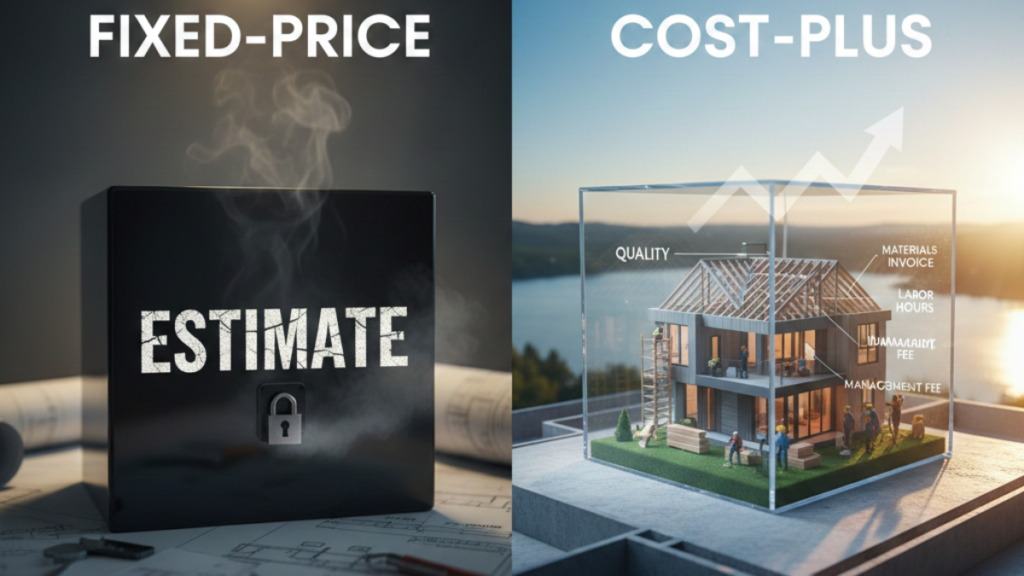
When embarking on a custom home project, the contract structure is often the most overlooked detail—yet it has the biggest impact on the final result. While “Fixed-Price” contracts are common, the Cost-Plus (Construction Management) model is increasingly becoming the preferred choice for savvy buyers who prioritize quality and transparency.
By separating the actual cost of construction from the management fee, this model creates a more collaborative environment. Here is why this approach offers a superior experience for the modern homeowner.
1. Radical Financial Transparency
In a Cost-Plus arrangement, the “black box” of construction pricing is eliminated. Every expense—from the foundation pour to the final coat of paint—is documented through original invoices and receipts.
- Direct Access: Homeowners pay the actual market rates for labor and materials.
- No Hidden Margins: There are no “safety buffers” or hidden markups built into the price to protect a builder’s bottom line against market fluctuations.
- Clear Accounting: This model provides a precise audit trail, which is often preferred by lenders for high-value custom projects.

2. Eliminating the “Conflict of Interest”
In a traditional fixed-price contract, any money saved on materials or labor typically increases the builder’s profit. This can create an inherent tension where the builder is financially incentivized to find the least expensive path forward.
In the Cost-Plus model, the management fee is decoupled from material choices. Because the fee is fixed or percentage-based and agreed upon upfront, the focus shifts entirely to sourcing the best possible craftsmen and materials for the established budget. The incentive is redirected toward quality and longevity rather than protecting a shrinking profit margin.
3. Ultimate Flexibility for Design
Custom home building is an evolving process. A Fixed-Price contract often penalizes “Change Orders” with heavy administrative fees, making it difficult for homeowners to adjust their vision once construction begins.
Construction Management offers a fluid alternative. If a homeowner decides to upgrade a flooring selection or adjust a room layout mid-project, the budget simply adjusts to reflect the true cost of that change. This allows for a more creative and less stressful building experience, where the final product can truly reflect the owner’s evolving tastes.
4. Protection in a Volatile Market
Material costs can be unpredictable. To mitigate this risk in a fixed-price deal, many builders over-estimate the cost of lumber, steel, and finishes to protect themselves from price spikes. In a Cost-Plus model, the homeowner avoids paying for “potential” inflation. If material costs stay stable or decrease, those savings stay in the homeowner’s pocket

5. A Partnership Approach
Under a Construction Management model, the builder acts as a consultant and advocate. Their role is to manage the complexities of the site, vet subcontractors, and maintain the schedule—all while acting in the best interest of the client. It transforms the builder-buyer relationship from an adversarial negotiation into a unified team working toward the same goal: a high-quality home delivered at a fair price.
Cost-Plus vs. Fixed-Price: At a Glance
The following table breaks down the fundamental differences in how your project is managed and billed under both structures.
| Feature | Fixed-Price Contract | Cost-Plus (Construction Management) |
| Pricing | A single total price is agreed upon upfront. | Actual cost of work + a transparent management fee. |
| Transparency | Costs are internal; the buyer rarely sees sub-invoices. | Open-book; buyer sees all invoices and labor costs. |
| Risk | Builder carries the risk of price spikes (and charges a premium for it). | Buyer benefits from market drops; pays actual cost for spikes. |
| Flexibility | Changes often require expensive, formal “Change Orders.” | Highly flexible; changes are billed at the actual cost of work. |
| Incentive | To finish under budget to maximize builder profit. | To source the best quality/value within the buyer’s budget. |
Why Sophisticated Buyers Choose Construction Management
Ultimately, the move toward a Construction Management model reflects a desire for a more professional, “consultative” approach to building. Rather than entering a transaction where the buyer and builder may have opposing financial goals (saving money vs. maintaining quality), the Cost-Plus model aligns both parties.
When the “profit” motive is removed from the selection of materials and subcontractors, the builder is free to act as a true project advocate. This ensures that every dollar spent is visible on the job site, rather than hidden in a contingency fund. For those building a custom legacy home, this level of control and honesty is often the deciding factor in a successful project.

Expert Insights by Sundev Homes
Sundev Homes is a premier home construction company specializing in high-quality residential builds. With deep roots in the Lakewood Trails community and a unique perspective on land development, we provide expert guidance on building modern, sustainable homes across the Sunset Lakes communities. Our expertise ensures that every home we build blends seamlessly with rural infrastructure while offering the highest standards of modern living.